



By Rabi Umar Gombe.
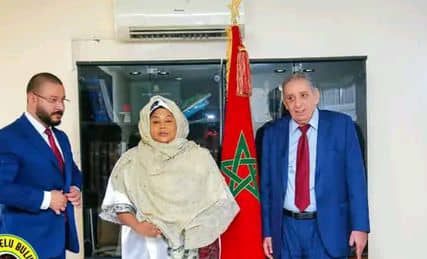
Nigeria and the Kingdom of Morocco have reaffirmed their commitment to strengthening bilateral cooperation on humanitarian service delivery and poverty reduction initiatives.
This followed a meeting between the Senior Special Assistant to the President on Humanitarian Affairs and Poverty Reduction, Hon. Delu Bulus Yakubu, and the Moroccan Ambassador to Nigeria, His Excellency Moha Ou Ali Tagma, held at the Moroccan Embassy in Abuja.
The discussions centred on expanding existing partnerships and developing new collaborative strategies aimed at improving the living conditions of vulnerable groups and enhancing sustainable social protection systems in both countries.
A statement signed by Khalipha Abdulrahman Isah, Personal Assistant New Media to the SSA, said the meeting provided an opportunity for both sides to review ongoing bilateral projects and explore innovative approaches to humanitarian response and poverty alleviation.
Ambassador Tagma, who received Hon. Yakubu alongside the Deputy Head of Mission and other senior embassy officials, expressed appreciation for the visit and reaffirmed Morocco’s readiness to deepen cooperation with Nigeria in tackling humanitarian and development challenges.
He noted that the meeting would further strengthen the long-standing diplomatic and economic relations between the two nations, paving the way for practical collaboration in key areas of social and economic growth.
In her remarks, Hon. Yakubu commended the Moroccan government for its continued partnership and reiterated President Bola Ahmed Tinubu’s resolve to strengthen international alliances that align with his administration’s vision of lifting millions of Nigerians out of poverty.
She described the collaboration with Morocco as a reflection of the shared commitment of both countries to building resilient communities, promoting inclusive growth, and advancing sustainable humanitarian and poverty reduction programmes.
The engagement also emphasized the importance of cross-border cooperation in addressing humanitarian challenges across Africa and the need for stronger regional partnerships to confront emerging socio-economic issues.
